

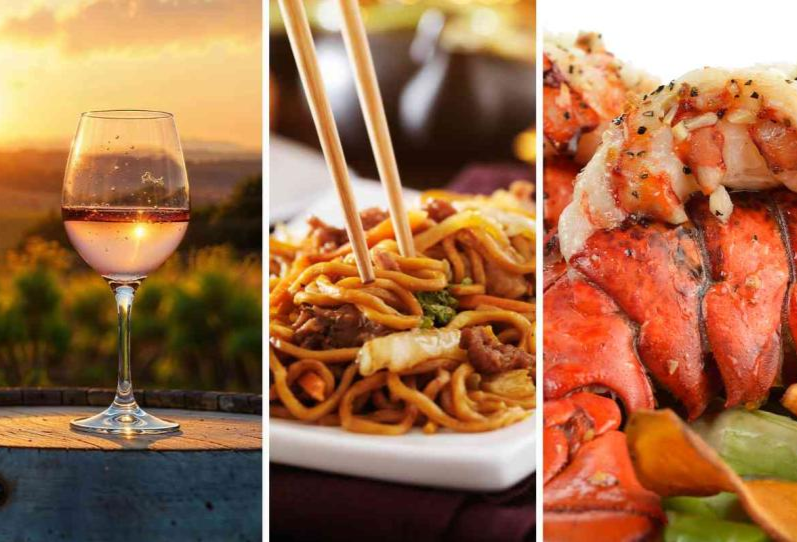

If you are the kind of traveler who plans vacations based on what you are going to eat for breakfast, lunch, and dinner, there is one gastronomic destination that has it all—from Chinese food to lobster: Baja California.
Talking about this northern Mexican state means entering one of the most exciting culinary scenes in the country. A spirit of creativity has placed Baja California in the spotlight of some of the most demanding food lovers in the world.
Imagine this scenario: starting the day with a coffee overlooking the Pacific Ocean, enjoying a crispy fish taco in the late morning, sitting down to a wine-paired meal in the afternoon, and ending the day sharing an oriental feast you would never associate with the Mexican desert.
Baja California does not have a single culinary identity but rather a mosaic of flavors that coexist in perfect harmony. It is a journey measured in bites, where every stop reveals a historical secret seasoned with a contemporary touch.


The Famous Chinese Food of Mexicali
The crown jewel of Mexicali is its Chinese food. But how did a border city in the middle of the desert end up with more than 300 Cantonese-style restaurants?
The answer begins in the late nineteenth and early twentieth centuries, when thousands of Chinese immigrants arrived in the region to work on the construction of the Colorado River irrigation system and the railroad lines developed by the Colorado River Land Company.
At one point, approximately 75 percent of the area’s population was of Chinese origin. This led to the creation of the legendary neighborhood known as La Chinesca, which featured an interconnected network of underground basements used as protection from the desert’s extreme temperatures.
It was in these kitchens that a unique culinary tradition emerged, adapting Chinese recipes with ingredients from northern Mexico and the southwestern United States. The result is a distinctive style characterized by generous portions, flavors tailored to local tastes, and iconic ingredients.
Some of the most representative dishes include:
- Pineapple chicken or sweet-and-sour chicken
- Skirt steak with wok-fried asparagus
- Chun Kun (spring rolls)
- Mexicali-style fried rice
The Lobster of Puerto Nuevo
Traveling south along the Tijuana–Ensenada highway leads to Puerto Nuevo, a small community within the municipality of Playas de Rosarito. This town is widely recognized as the lobster capital of Mexico.
The history of this specialty began in the 1950s, when local fishermen and their wives started serving American tourists a simple recipe: lobster split in half and fried in pork lard, creating a crispy exterior and a juicy interior.
The traditional Puerto Nuevo lobster meal is known for its classic accompaniments:
- Generous portions of red rice and refried beans
- Melted clarified butter for dipping the lobster meat
- A spicy red sauce traditionally prepared with árbol or bird’s-beak chili peppers
- Large handmade Sonoran-style flour tortillas served warm

The Wine Route of Baja California
No gastronomic experience in Baja California is complete without a glass of wine, and for that there is one iconic destination: the Guadalupe Valley in Ensenada.
Considered the heart of Mexico’s Wine Route, this region and its neighboring valleys—such as San Antonio de las Minas, Ojos Negros, and Santo Tomás—produce approximately 70 percent of all Mexican wine.
The Guadalupe Valley combines Mediterranean-style landscapes with an innovative culinary scene influenced by the Baja Med movement, a fusion of Mexican cuisine, Mediterranean techniques, and Asian ingredients.
Exploring the Wine Route involves visiting boutique wineries and large wine producers that experiment with bold blends inspired by the region’s unique climate and terrain.
The Guadalupe Valley is more than a destination for wine tasting. It offers a complete sensory experience that combines gastronomy, relaxation, and appreciation of the natural landscape.
A State Best Experienced Through Its Flavors
Exploring the gastronomic destinations of Baja California demonstrates how food reflects geography, history, and the warmth of its people. It is a state that can be experienced through every meal and remembered through every bite.

Source: excelsior


